Trust your read, for a 11-handicap player, ~15 minutes.
Putting15-18 min11 HCP5 drills
Aim39%
Scoring16%
Alignment14%
Practice Programs
Discover tailored practice programs for this course.
Total Programs
16
16 complete programs built for this course
Unique Drills
83
Total unique drills across all programs
Skill Pillars
12
Accuracy · Aim · Alignment · Dispersion · Distance Control · Green Reading
Session Durations
6
3 days , 4 days , 5 days , 6 days , 7 days , 9 days
We've mapped a comprehensive practice profile for Awaji, identifying the specific skills this course demands most. The skill distribution below shows which areas of your game will be tested most frequently based on the hole-by-hole analysis (hole handicaps, stroke index, yardage, etc.), while the handicap ranges indicate the typical player profiles who perform well here.
Focus your practice on these key skills to maximize improvement and lower your scores. Check the practice programs below for targeted drills that address these specific skills.
Skill Distribution
The handicap ranges shown represent the typical performance levels for this course. Players within these ranges can expect competitive scores, while those outside may yield benefits or may need additional practice in the highlighted skill areas to perform at their best.
Top Drills
Most-used drills from for this course. Practice as standalone drills or scroll down for full programs.

Make 15 out of 25 putts, underneath the hanging string line.

Hit flop shot two buckets of balls (avg. bucket is 40 balls) from the flat deep rough and other extreme grass types.
Complete the Ladder Challenge using wedges only. Hit one bucket of ~50 balls.

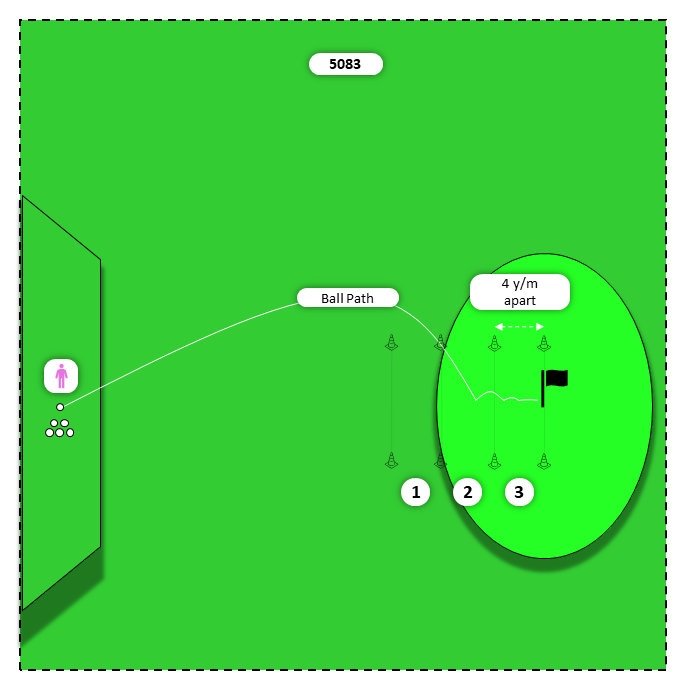
Up to 5 players compete to stop a flop shot inside the quadrant(s). The player with the most points wins the challenge. One bucket of balls per player is needed.

Hit flop shot two buckets of balls (avg. bucket is 40 balls) from the flat rough grass.

Hit flop shot two buckets of balls (avg. bucket is 40 balls) from the sloped deep rough and other extreme grass types; one bucket with balls above feet level, one bucket with balls below feet level.
Everything you need to know about Awaji.
Phone
+44 (0)1250 872622
Fax
+44 (0) 1250 872622
Giving lessons at Awaji Country Club? Get featured here.
Ikutatajiri
Awaji Country Club is a nationally recognizable golf club located on Awaji Island, Hyogo Prefecture, offering an ocean-view, 18-hole course with a long-standing history. The resort-style course is surrounded by pine woods and provides a strategically challenging layout just a short distance from Kobe and Osaka. The club emphasizes scenic beauty of the Seto Inland Sea, and hosts regular competitions and member events, welcoming players for visits and reservations through its online platforms. Contact information and facility details are provided, along with course guides and reservation options for visitors.
ocean-view golf • awaji island golf • seto inland sea golf • 18-hole golf course • golf resort • pine forest course • kobe osaka proximity • hyogo golf • golf competition scheduling • course guide • facility guide • golf reservations • golf membership • golf events • coastal golf • golf in japan • golf tourism • awaji tourism • awaji island • seto inland sea • 18-hole course • kobe osaka access • golf competitions • facility information • online reservations • recreation
Holes
18
Par
72
Type
Parkland
Opened
1963
Interested in our comprehensive dataset of 40,000 golf courses? Contact us to learn more.
Programs
We studied the course layout and prepared practice programs to lower your scores. The programs are purpose-built for each tee to align with the course strategy. Each program consists of curated drills, with pre-defined modules designed to deliver results.
Filter programs by category (select one)
Showing 16 Programs
% match to course practice profileTrust your read, for a 11-handicap player, ~15 minutes.
Land near the pin, for a 17-handicap player, ~15 minutes.
Aim for soft landing, for a 23-handicap player, ~20 minutes.
Land softly, for a 25-handicap player, ~20 minutes.
A complete and progressive long-term development curriculum mapped from easier to harder drills, specifically for Awaji. Start with the basics and work your way towards more challenging drills. Commit to 15 weeks of training and get in proper shape. Four days counts as a week.
Putting · 6 ft (2m) only
Stop Missed Mid Putts Accurately
Difficulty: Intermediate · Program HCP 11.0
Short Game · Flop
Hit Flop & Avoid Big Numbers
Difficulty: Beginner · Program HCP 35.0
Short Game · Bump'n'Run
How straight can you roll it? Test your setup
Difficulty: Beginner · Program HCP 30.0
Short Game · Flop
Set your sights high: aim for a soft landing
Difficulty: Beginner · Program HCP 23.0
Short Game · Pitch
How many can you leave inside 5 feet?
Difficulty: Intermediate · Program HCP 17.0
Short Game · Bump'n'Run
Land Ball 2–3 Feet From Pin
Difficulty: Intermediate · Program HCP 17.0
Driving Range · Wedges (LW,SW,GW,PW)
Shape it perfectly: fade or draw with wedges
Difficulty: Beginner · Program HCP 25.0
Driving Range · Mid irons (7,6,5)
Control the arc: launch and roll as needed
Difficulty: Beginner · Program HCP 20.0
Driving Range · Wedges (LW,SW,GW,PW)
Challenge: eliminate off-target wedge shots
Difficulty: Intermediate · Program HCP 17.0
Mobile app
Save it to favorites, get personalized recs, and track completions anywhere.


Use the same account to keep your starred curriculum synced.
Get personalized coaching and custom training programs tailored to your game.
Get StartedMaximize in regulation, for a 1-handicap player, ~10 minutes.
Flop from bunkers, for a 1-handicap player, ~10 minutes.
Square up, for a 31-handicap player, ~30 minutes.
Pitch close, for a 18-handicap player, ~15 minutes.
Approach from hazards, for a 17-handicap player, ~15 minutes.
Set sights, for a 17-handicap player, ~15 minutes.
Flop from sand, for a 35-handicap player, ~30 minutes.
Maximize greens in regulation, for a 1-handicap player, ~10 minutes.
Precision from 200 yards, for a 1-handicap player, ~10 minutes.
Fade or draw mid irons, for a 20-handicap player, ~20 minutes.
Reduce misses, for a 18-handicap player, ~15 minutes.
Eliminate off-target wedges, for a 18-handicap player, ~15 minutes.
Get personalized coaching and custom training programs tailored to your game.
Get StartedFollow a complete multi-week structured practice program ahead of the upcoming events and arrive prepared.
No upcoming tournaments at this time.
FAQ
Get answers to common questions about playing Awaji and what to expect.
Awaji is regarded as a strategically complex layout. The 120 slope rating keeps it accessible for developing players. The course rating of 70 reflects on scoring relative to par 72.
A 15 handicap golfer should consider tees closer to 6000 yards. The back tees extend to 6500 yards, which makes approach shots longer and scoring more challenging.
With a course rating of 70 and par 72, a mid-handicap golfer would typically score in the mid to high 80s. Stronger players aiming to break 72 must manage approach shots and avoid penalty strokes.
At a full length of 6500 yards, it balances distance with positional strategy.
Architecturally, it reflects a Parkland style. Overall, the setup will reward players who place the ball in safe positions far from hazards. Also, type of shot is more crucial rather than just trying to gain distance.
The combination of a slope rating of 120 and yardage reaching 6500 yards creates consistent pressure on approach shots. You will need to balance risk and reward, especially on longer par 4s and protected greens.